

We'd been told that a couple of days was more than enough time to spend in Jaisalmer as there wasn't anything to do. Aren't people weird? We ended up staying for five nights!
(Click the photo above to enlarge it - "boring" Jaisalmer in all her golden glory!)
(Click the photo above to enlarge it - "boring" Jaisalmer in all her golden glory!)

Within the fort walls is a treasure trove of seven interconnecting Jain temples, carved from yellow sandstone and dating back to the fifteenth century.

A religion dating back over five thousand years, Jainism is based on non-violence. Jains lead a vegetarian lifestyle, renouncing the killing of all living beings no matter how small. Jains refrain from eating root vegetables as the plant is killed when the root is removed from the ground, some carry a broom to gently sweep away any tiny creature in their path and others wear face masks to avoid inadvertently breathing in insects.


The Jain temples are open from 8am to noon daily. Shoes and all leather items must be removed before entering. The entrance fee is 200 rupees/£2 for foreign tourists.

The Fort Palace, the former ruler's elegant seven-storey home, towers over Jaisalmer's town square.
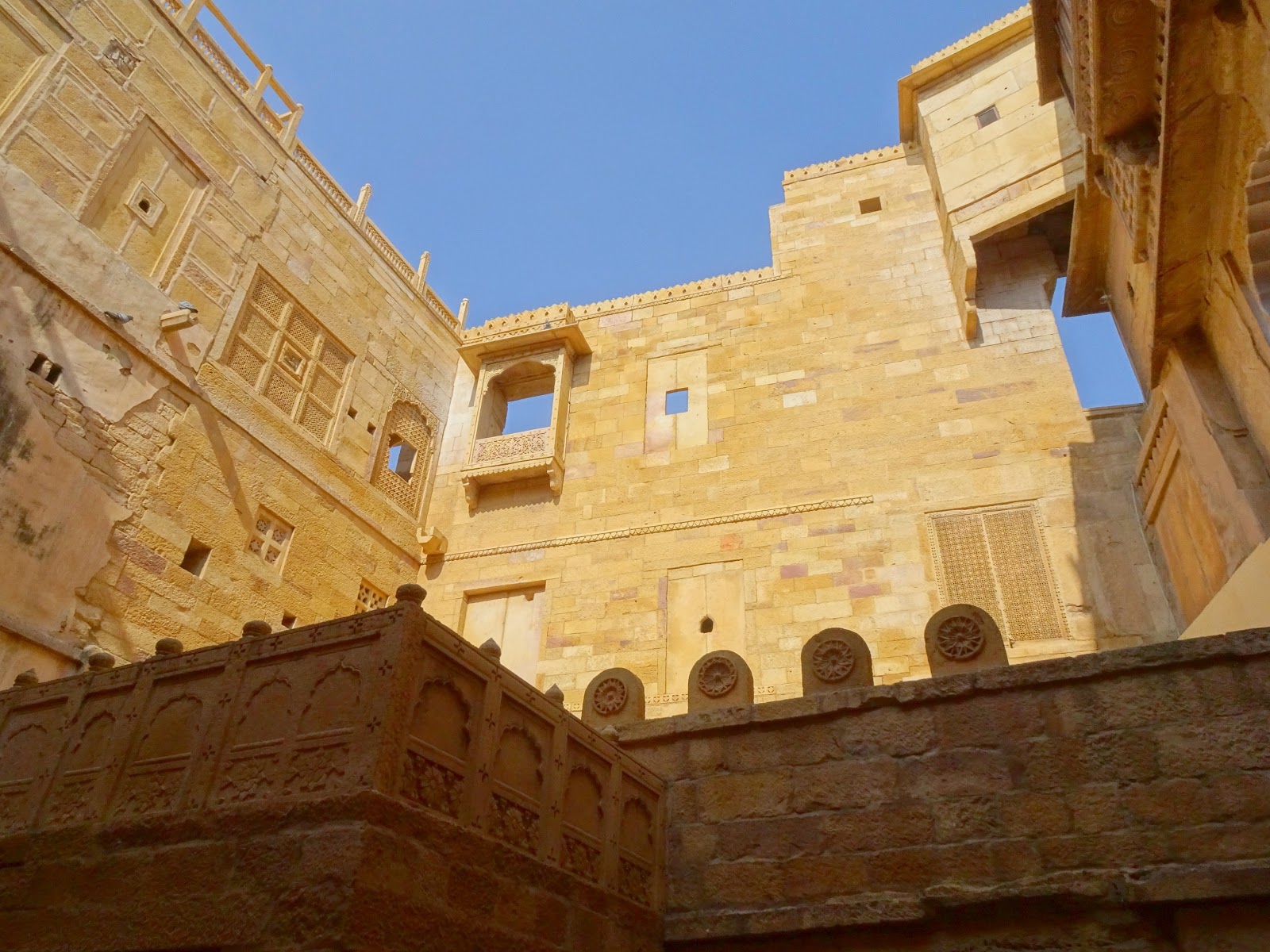
Much of the palace is open to the general public and the small rooms on each floor give a fascinating insight as to how the residents could spy on the outside world. The doorways connecting the rooms are rather low - not a reflection of the stature of the Rajput leaders but a means of forcing visitors to adopt a humble stooped posture in case the room they were entering contained the royal family.


The Victorian tiles in the collage above are Minton and originated a few miles away from Walsall in Stoke-on-Trent.

The bedroom windows of the Queen's palace (Rani-ka-Mahal) offered the royal women the perfect view of Jaisalmer's annual Gangaur processions in Spring.

Entry to the palace is 500 rupees (approx.£5) which includes a fascinating audio guide lasting 90 minutes. Open from 9am - 6pm daily.

The 450-year-old Baa-ri-haveli once belonged to the Brahmin priests that advised the maharajah.

We stumbled upon the haveli and museum by accident when we took a wrong turning and at just £1 (including the services of an engaging young guide) it was brilliant value for money although, as you can see, we were persuaded to wear a turban for the duration of our visit (a small price to pay!)


As it only rains four times a year in Jaisalmer there's a profusion of pots enabling as much precious water as possible can be collected & stored.


The family photos lining the walls gave a tantalising glimpse into the lives of the wealthy, ruling classes in 19th century Jaisalmer. (Click on the photo collages to enlarge them).


The rooftop offered a great view of the Jain temples.

Jaisalmer fort is packed with cafes, coffee shops, and restaurants all touting for business. I'm sure they're very nice but we refuse to be shepherded into places, preferring to choose somewhere at leisure. Our favourite hangout was this funky little cafe a short walk away from the general hubbub of the fort. We loved how they'd repurposed old beer bottles (and were more than happy to contribute a few more!)

Jon's snapping some graffiti on the wall that says, The Plan is No Plan, which sums up our approach to travel!


The cafe had just opened a shop downstairs, employing disadvantaged women to sew clothes made from recycled sari fabric. There was a tailor on-site offering alterations, bespoke clothing and also an option to dye fabric to customer specifications.

It's often remarked that I don't dress like a typical Western tourist eschewing the ubiquitous uniform of puffa jacket, cropped jeans and trainers for vintage dresses and tribal jewellery and many Indians ask if I'm a French or Italian fashion designer or an actress. When we first met, manager Ajay thought I was in the fashion business and asked for my help in writing some signs for his shop to explain what the business was all about. I was more than happy to help for free - although he insisted on giving me a wonderful antique printing block by way of a thank you.

The people of Rajasthan really are wonderful.

For reasons far too mundane to explain, we missed the long-distance bus we'd booked from Jaisalmer to Jodhpur to catch our flight down to Goa. When Jon asked the manager of the Toyko Palace to arrange a driver to take us to Jodphur Airport at 4am the following morning, he insisted on driving us there himself (a nine-hour round trip!) The hotel manager was as bewitched as we were by the sunrise over the Thar Desert and the multiple peacocks by the side of the road, even stopping at a Hindu temple to give thanks for Rajasthan's beauty. When we reached Jodhpur he bought us roses as a reminder of our journey.

Our ten days in Rajasthan were truly magical and, although Jodhpur stole our hearts, our time in Jaisalmer was pretty special, with grand Havelis and palaces, ancient forts and temples and, of course, a night in the desert, it certainly wasn't boring.


