


We had a wander along the cut (the canal) in the glorious sunshine.


Our destination was that bottle kiln you can see in the distance. Stretching from Stourbridge to Dudley, the area was a major glassmaking centre for over four hundred years, the lifeblood of the community and a substantial contributor to Britain's manufacturing strength and national wealth.

The glass industry was established at the beginning of the 17th century by glassmakers from Lorraine in north-eastern France, who were attracted to the area by the rich natural resources. The availability of coal, for fuel, and fireclay , for making furnaces and melting pots, made the area a perfect location for glass making. Coleman's Glasshouse, Lye, was probably the first glasshouse in the district, constructed in the early 1600s. At first the glasshouses produced window glass and bottles but, by the end of the 17th century the glasshouses began to make the lead glass tableware for which the area became famous.

It was towards the end of the 17th century that a new structure appeared in the area, the distinctive cone shaped glasshouse that would dominate the landscape. Cones were the next step in glass making technology. Earlier glasshouses were simple structures that protected the furnace and glass makers from the weather. The new design transformed the glasshouse into a giant chimney. It still sheltered the furnace and workers, but it also sucked air through the furnaces. The flow of air increased the temperature. Many were built across Britain and to a lesser extent in Europe. The best surviving example is the Red House Glass Cone in Wordsley (pictured).

The industry grew and evolved for the next 275 years and glass from Wordsley, Amblecote and Brierley Hill. Its golden age was the Victorian period when firms introduced a dazzling array of cameo, coloured glass and crystal said to be the best in the world. In the decades following World War Two, the fortunes of the glass industry slowly declined with failure to modernise, foreign competition and changing tastes all contributing to its demise. The final decades of the 20th century saw the loss of the four major companies, Thomas Webb and Sons, Webb Corbett, Royal Brierley Crystal followed by Stuart Crystal in 2006. Tudor Crystal and Brierley Hill Crystal continue to manufacture crystal glass whilst the Stourbridge glass industry retains some small traditional cut glass manufacturers. Plowden & Thompson, is the only glass factory still operating in an original glass cone site. The tradition of coloured glass is kept alive by a growing number of small glassmaking studios.

Reaching 100ft into the sky, The Red House Glass Cone was built in 1794 and used for the manufacture of glass until 1936. The space is now home to a museum.

Shamefully it's the first time I'd visited the area's museums. Back in 1987 I temporarily managed the factory canteen at one of Stourbridge's glassworks, it was a rare hot summer, the kitchens were above the furnaces and we'd take it in turns to sit in the walk-in fridge to cool off. Any imperfect glass would be left outside in crates for the workers to help themselves. Although I've collected mid-century art glass since I was a teenager the factory only produced crystal (blingy cut glass), which I've always disliked, so I didn't bother taking any.


The annealing or lehr oven is believed to be the last in the world.


Next stop was the neighbouring Stourbridge Glass Museum where we played what would you take home if you could?

This pleasingly chunky decanter, dating back to 1640, grabbed our attention.

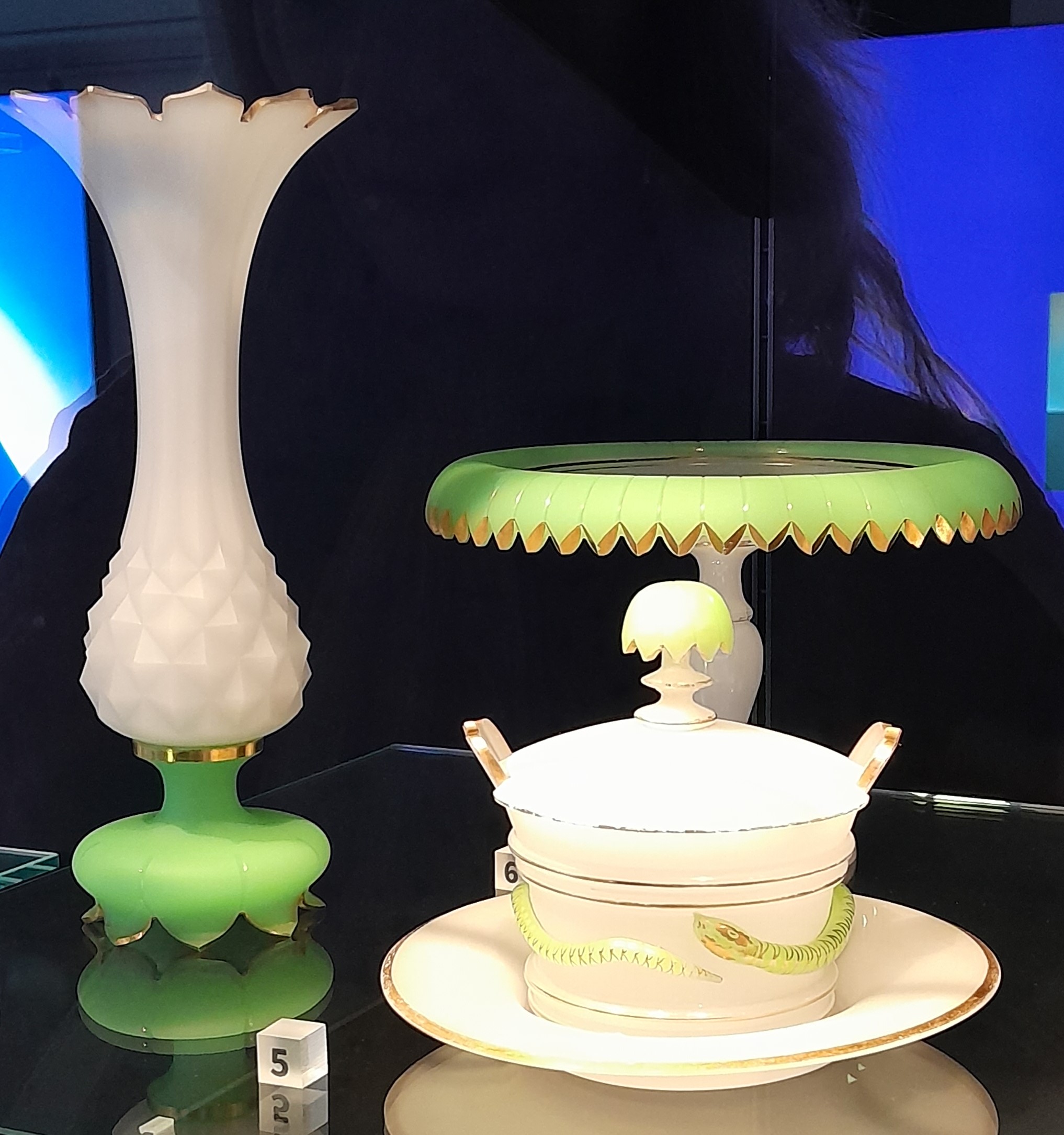
As did these decadent Georgian green glass vases set with ormolu. We rather liked the Glassmaker's chair, too.




There was a special exhibition of Carnival Glass, very popular on the vintage scene but loathed by both of us. Definitely not on the fantasy shopping list!


I was rather taken with the Portland Glass inspired by the pieces found during the excavation of Pompeii in the mid-1800s and created by Ian Dury (not that one!)


We popped over the road to CAMRA winning pub, The Bird in Hand, where the drinkers told us that women were a rarity and treated us like celebrities, following us outside into the beer garden and gazing on us adoringly. We met Stourbridge's answer to Gerald from Clarkson's Farm, neither of us understood a word he was saying but he was very charming!


